The Steel That Keeps Rail Moving
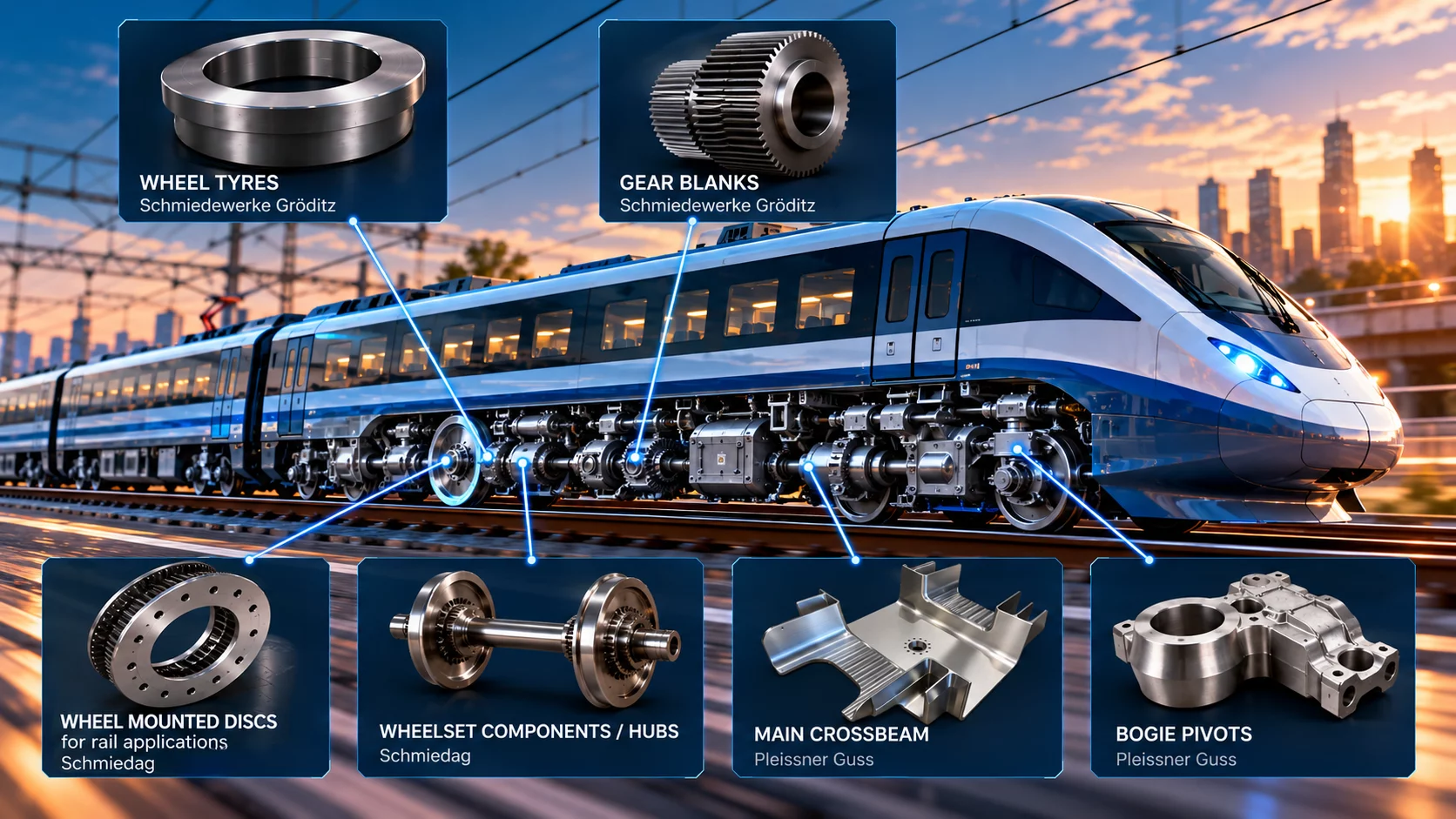
A locomotive wheel tyre carries heavy loads over thousands of kilometers. Brake discs absorb the energy generated during braking, while bogie components transfer forces between the vehicle body and running gear.
GMH Gruppe manufactures steel products for these applications through three companies: Schmiedewerke Gröditz, Schmiedag and Pleissner Guss. Their products range from rolled wheel tyres and forged brake components to complex steel castings.
Wheel tyres made in Gröditz
Schmiedewerke Gröditz manufactures wheel tyres through steelmaking, forging, ring rolling and heat treatment.
Its portfolio includes more than 100 steel grades, with wheel tyre diameters ranging from 400 to 2,100 mm. Profiled ring rolling allows the material to be formed close to its final contour, reducing subsequent machining.
The products are used in locomotives, trams, metro and underground rail systems worldwide.
Schmiedewerke Gröditz holds Deutsche Bahn Q1 supplier classification and manufacturer-related product qualification (HPQ), as well as approvals for markets including the UK and the Czech Republic.
Forged brake and wheelset components
Schmiedag manufactures closed-die forgings for railway applications, including brake discs, hubs and wheelset components.
Its production capabilities cover forgings weighing up to approximately one tonne, with in-house heat treatment and machining. Customers can source forged blanks, pre-machined parts or fully machined and painted components.
Schmiedag also operates its own toolmaking facilities and uses magnetic particle and ultrasonic testing for quality inspection.
The company holds Deutsche Bahn manufacturer-related product qualification (HPQ) for railway components.
Steel castings for running gear and coupling and drawgear systems
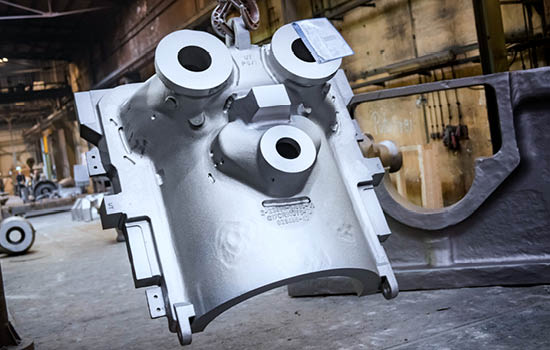
Pleissner Guss in Herzberg produces steel castings for railway applications, including main cross members and bogie bearings for bogies (running gear), as well as coupling heads for coupling systems.
The foundry manufactures custom steel castings weighing from 150 kg to 10 tonnes and offers in-house heat treatment, machining and inspection.
Its testing equipment includes a 3-MeV linear accelerator for radiographic inspection of castings with wall thicknesses of up to approximately 200 mm.
As part of a €6 million modernisation programme completed in 2025, Pleissner replaced two smaller induction furnaces with two larger, more energy-efficient units and introduced additional optical 3D measurement technology. This allows finished castings to be compared with customers’ CAD data even faster.
Steel for railway manufacturing
Schmiedewerke Gröditz, Schmiedag and Pleissner Guss cover three manufacturing processes for railway components: ring rolling, closed-die forging and steel casting.
Depending on the application, products are supplied as blanks, machined parts or components ready for installation.


Would you like to join us as
a decarbonization pioneer?
With us, you can lead your company into a green future.