The Steel Behind Modern Energy Infrastructure
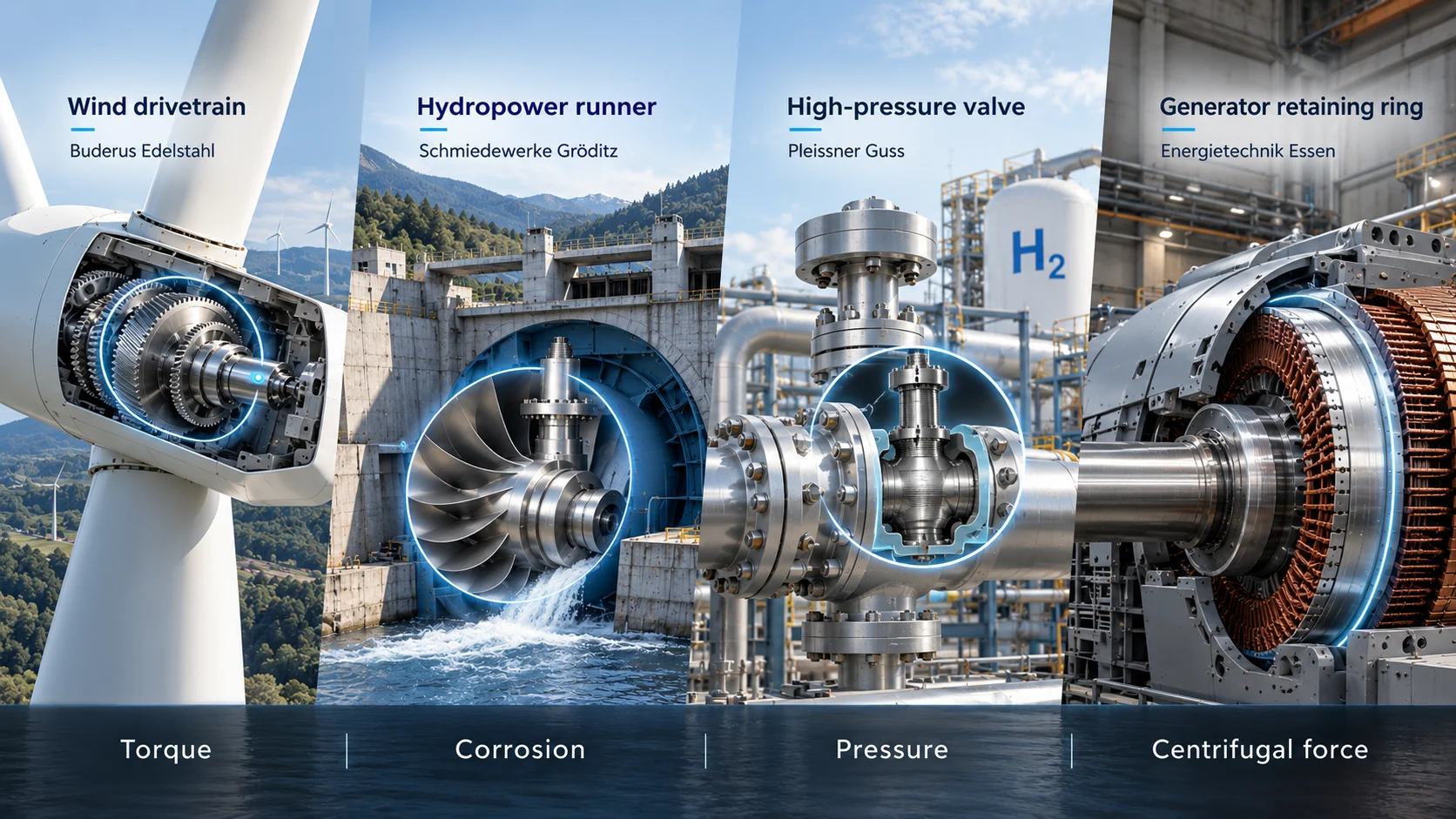
Wind turbines, hydropower plants, hydrogen systems and large generators require steel components with very different properties.
Across GMH Gruppe, companies supply specialized materials, forgings and castings for these applications – from 45-tonne turbine components to generator retaining rings operating at 3,600 rpm.
Wind power: steel for heavily loaded gearboxes
Wind turbine gearboxes operate under continuous torque and cyclic loading. Their gears, shafts and rings require steel with high fatigue resistance and suitable hardenability.
Stahlwerk Bous GmbH produces cast ingots and continuous-cast steel used as starting material for gear components and rings.
Buderus Edelstahl GmbH supplies engineering steels including 18CrNiMo7-6 (1.6587), a grade used for wind turbine gearboxes, transmission shafts and ring gears.
Georgsmarienhütte GmbH has also worked directly with a wind-energy customer to develop specialized forged gearbox components. The project involved joint technical analyses to meet specified strength and toughness requirements.
For gearbox manufacturers, this allows material selection and component development to be addressed together, taking account of the loads and properties required in service.
Hydropower: forgings up to 45 tonnes
Schmiedewerke Gröditz GmbH manufactures runners and blade wheels for Pelton, Francis and pump turbines, with open-die forgings weighing up to 45 tonnes.
The company’s production facilities include a 50-tonne electric arc furnace, secondary metallurgy, electroslag remelting and 27-MN and 60-MN forging presses. Steelmaking, forging, heat treatment and machining are carried out at the same site.
For turbine manufacturers, this allows large forged components to be produced and machined within one manufacturing operation.
Materials include corrosion-resistant soft-martensitic Cr-Ni-Mo steels such as 1.4313 and 1.4418, selected for their strength, toughness and corrosion resistance.
Hydrogen: castings for high-pressure valves
Hydrogen infrastructure requires valves and other pressure-bearing components manufactured from materials selected for their operating conditions.
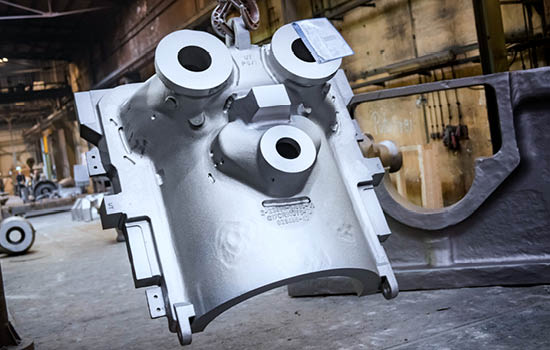
Pleissner Guss GmbH produces complex steel castings for valve applications, with a material portfolio that includes stainless, duplex and superduplex steels as well as nickel-based alloys.
Pleissner manufactures castings weighing between approximately 150 kilograms and 12 tonnes, using materials ranging from unalloyed steels to stainless, duplex, nickel-based alloys and “NiResist”-materials. Computer-aided simulation is used to assess mould filling and solidification before production.
Inspection capabilities include ultrasonic and surface-crack testing, together with radiographic examination of wall thicknesses up to 300 mm using a 3-MeV linear accelerator.
For valve manufacturers, Pleissner can provide material selection, casting, machining and inspection within its own production facilities.
Power generation: retaining rings for turbine generators up to 3,600 rpm
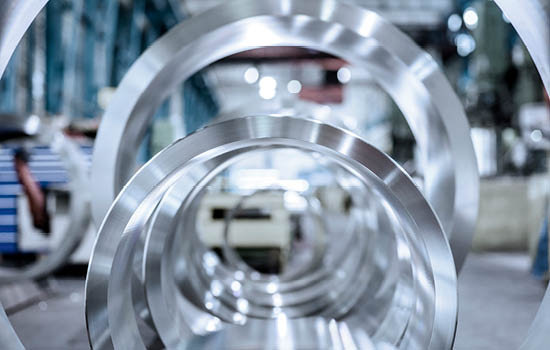
Energietechnik Essen GmbH (ETE) manufactures retaining rings for large turbine generators. These components secure the rotor winding end turns against centrifugal forces at speeds of up to 3,600 rpm.
Made from P900, the rings combine high strength, fracture toughness, fatigue resistance and dimensional stability.
ETE manufactures retaining rings with diameters of up to 2,200 mm and weights of up to 4,000 kg. They are used in turbine generators for nuclear power plants, gas-fired, steam and combined-cycle gas and steam power plants (CCGT), serving both public electricity supply and industrial self-generation, as well as in selected high-performance electric motors.
Buderus Edelstahl also supplies large forged generator shafts for power-generation applications.



Would you like to join us as
a decarbonization pioneer?
With us, you can lead your company into a green future.