Turning scrap into excellence,
reducing CO₂ emissions
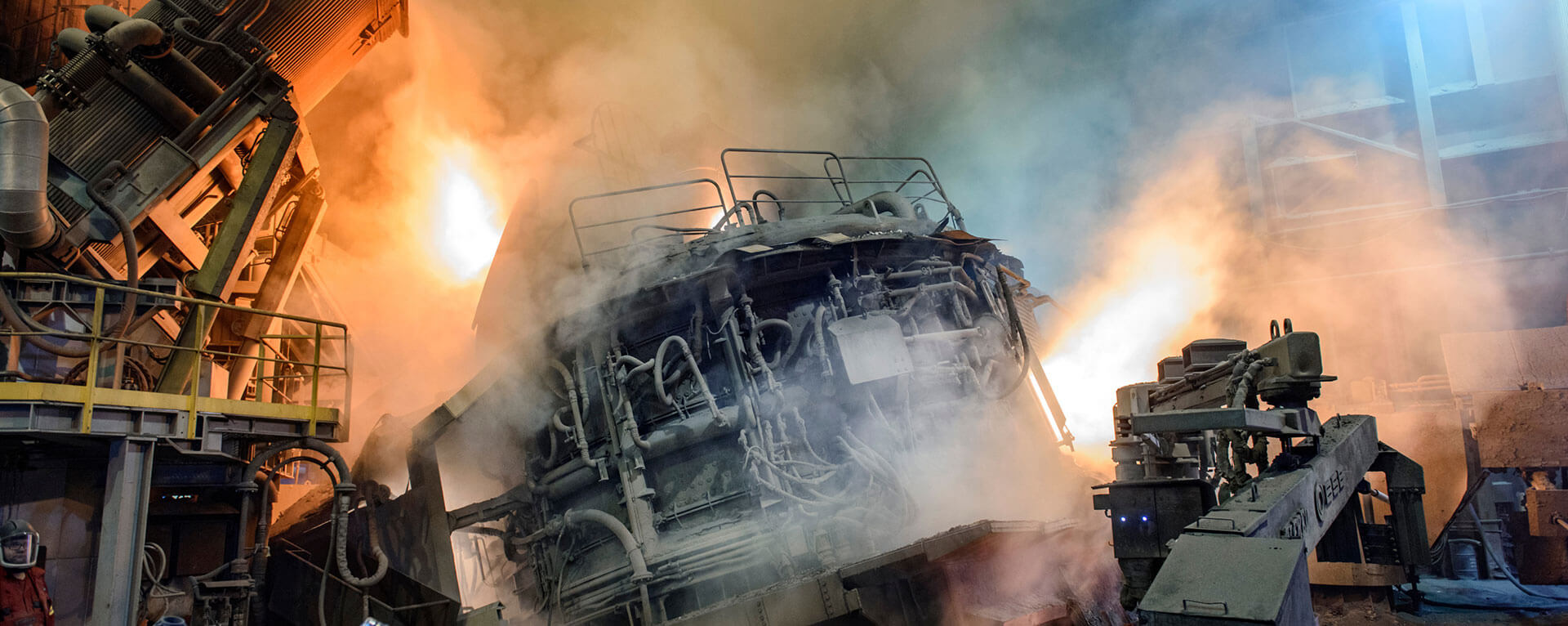
From crude steel to ready-to-install components: steel products with a high share of scrap and lower CO₂ emissions
We are shaping the future of steel by using scrap as a key raw material in our electric arc furnaces. This enables us to produce Green Steel with lower CO₂ emissions compared with the conventional BF-BOF steelmaking route.
Recycling scrap
Scrap as the foundation of our steel value chain
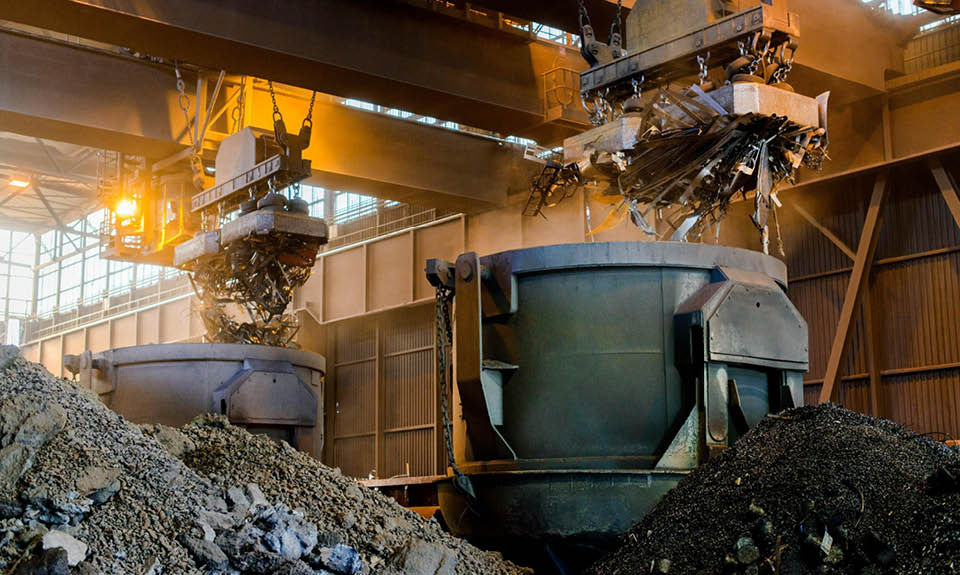
Scrap is the basis of our steel production. In our electric arc furnaces, we produce high-tech steel products using almost 100 percent scrap as metallic input. This reduces the need for primary raw materials and keeps valuable materials in circulation. We process steel scrap, special scrap and non-ferrous metal scrap for reuse and return production scrap, such as offcuts and shavings, to the material cycle.
Steel scrap
We reuse unalloyed steel scrap directly in our steelmaking plants as a raw material for new products.
Special scrap
We break down ferrous byproducts from pig iron and steel production into weights and sizes suitable for use in a furnace.
Foundry scrap
We supply foundries with processed recycled raw materials tailored to their requirements.
Alloyed steel scrap
In addition to its iron content, alloyed steel scrap contains components that make the steel more resistant to heat and corrosion.
NF metal scrap
Our portfolio also includes NF scrap, i.e. all scrap made from non-ferrous metals.
Grinding sludge
We process grinding sludge in our briquetting plant ready for material recycling in steelworks.

The electric arc furnace
Steel production with lower CO₂ emissions
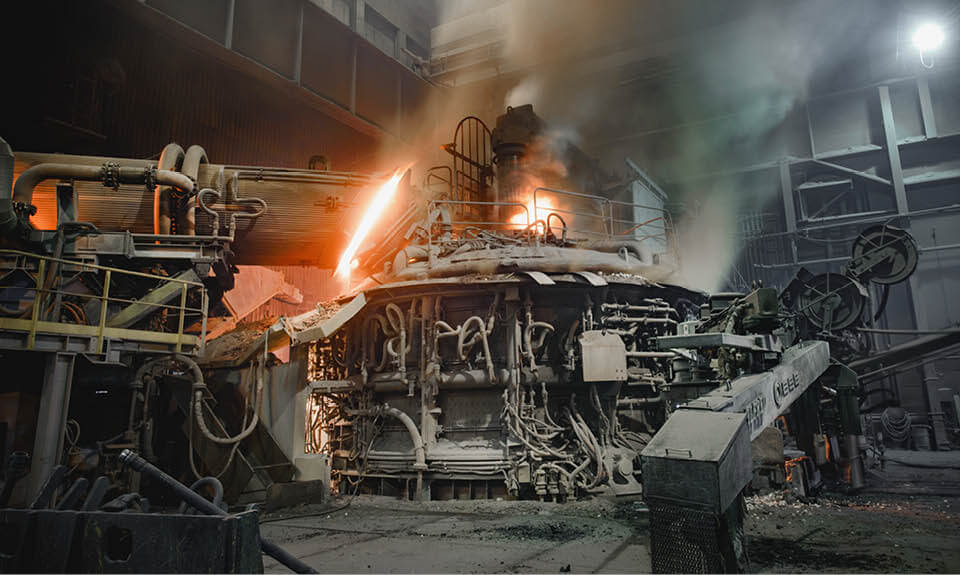
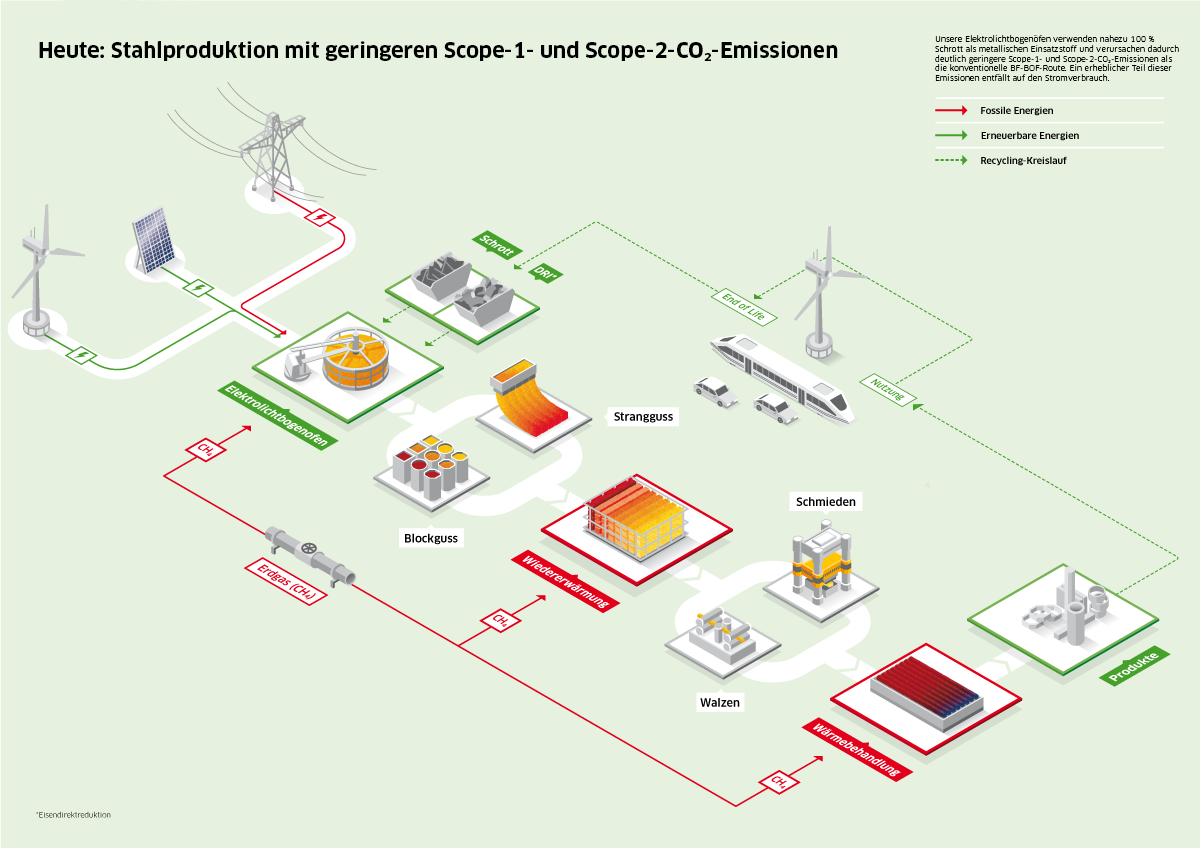
We produce steel from scrap in electric arc furnaces, resulting in significantly lower Scope 1 and 2 CO₂ emissions compared with the traditional BF-BOF steelmaking route. Our electric arc furnaces can also respond flexibly to demand, unlike integrated steelworks with continuous operating cycles. By increasingly using electricity from renewable energy sources, we are working to further reduce CO₂ emissions from our steel production.
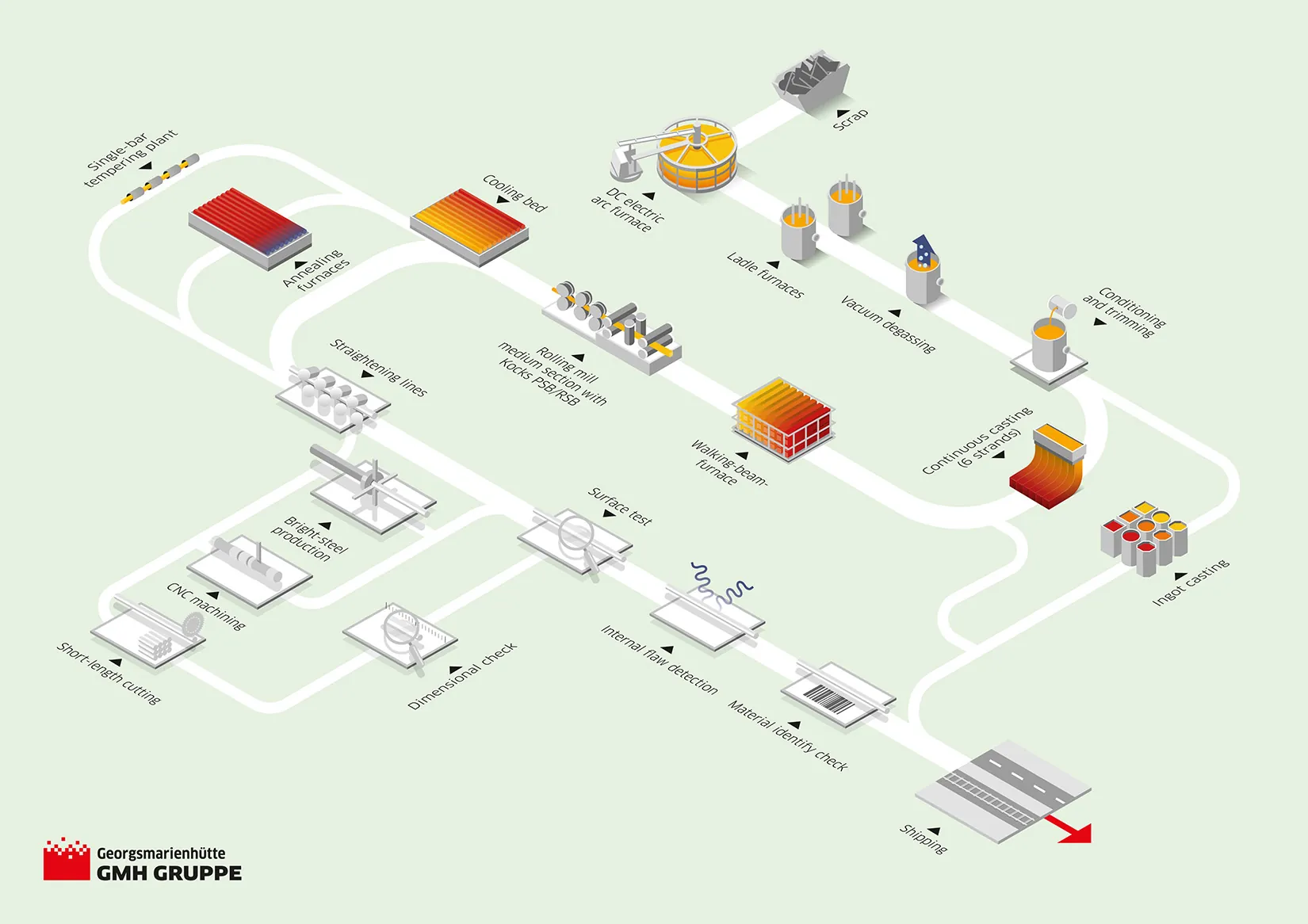
1 Melting:
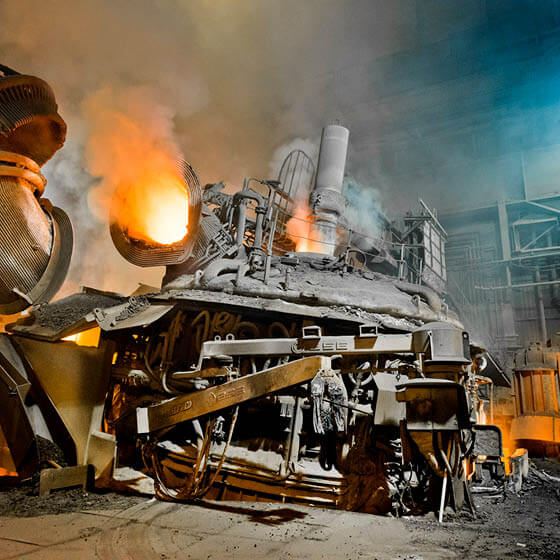
The scrap is melted down in the electric arc furnace. The electric arc between the graphite electrodes reaches temperatures of up to 3,500 degrees Celsius.
2 Tapping:
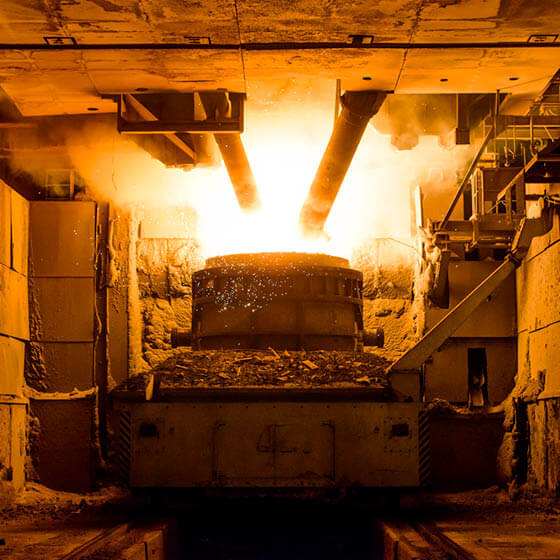
The molten steel runs into the ladle through a refractory tube in the furnace floor. The addition of alloying elements gives the steel exactly the right properties for the customer’s end product.
3 Continuous casting process:
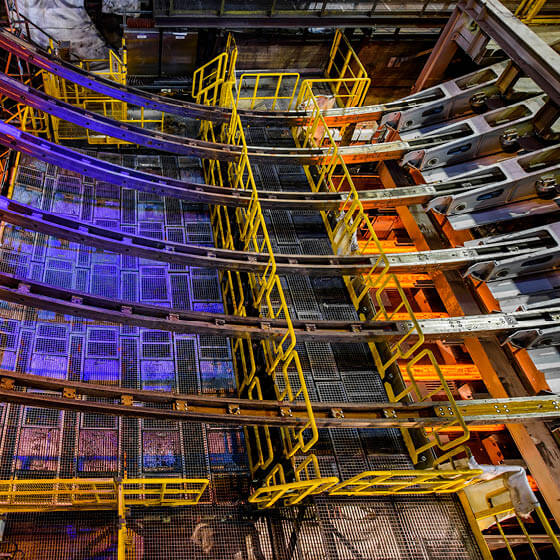
The molten steel is then cast continuously.
4 Flame cutting machine:
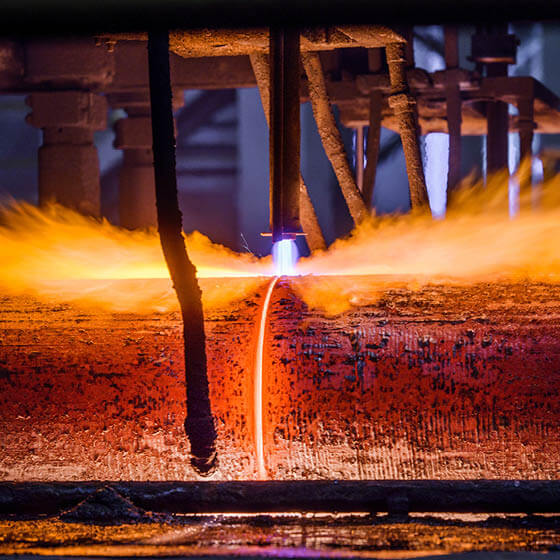
Depending on the customer’s specifications, the steel is cut using either continuous or ingot casting, cooled in the turning bed and checked for quality in the finishing area. After this, it is ready to be dispatched.
How we use our electric furnaces
to produce Green Steel

Green Steel products
From crude steel to
high-tech steel
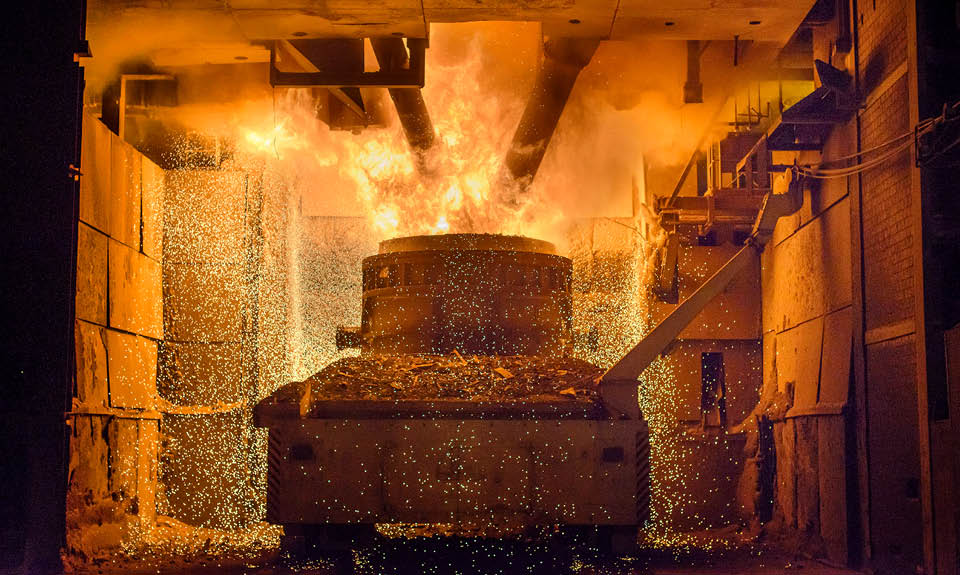
We supply steel products at different stages of processing, across several Green Steel product lines with clearly defined criteria and consistently high quality standards.
Closed-loop manufacturing
Maximum sustainable
value creation
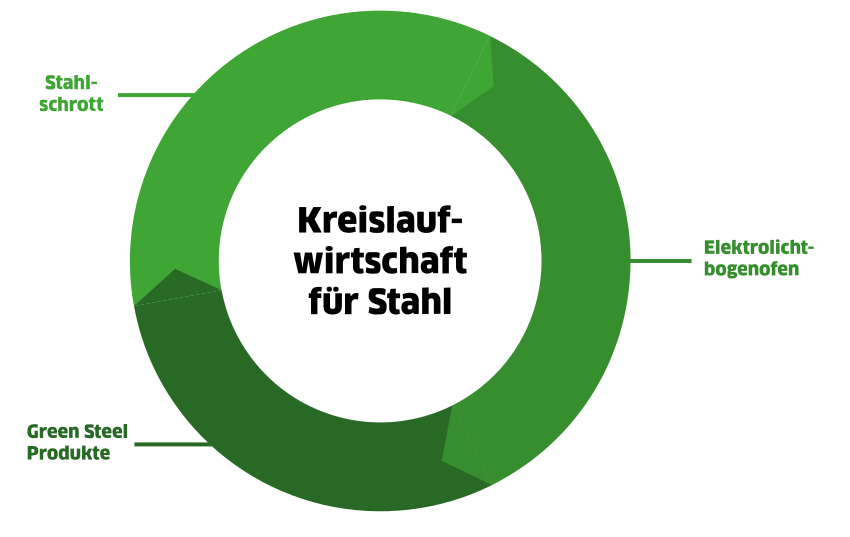
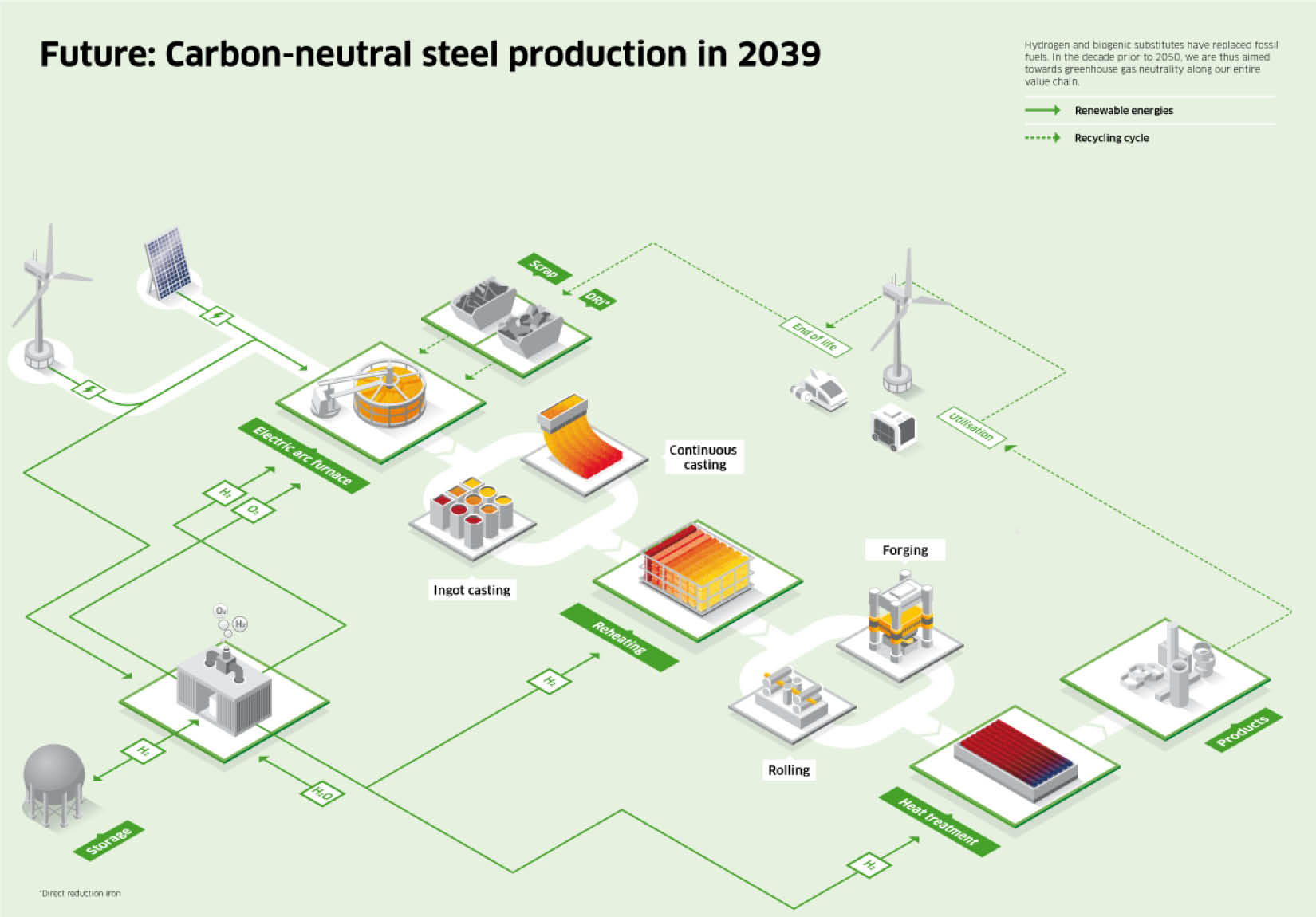
Our aim is to productively reuse resources and materials over and over again, to take full advantage of synergies along the entire value chain. This is why we rely on integrated product and energy cycles in our value stream, which we are constantly improving.
Our path to lower CO₂emissions
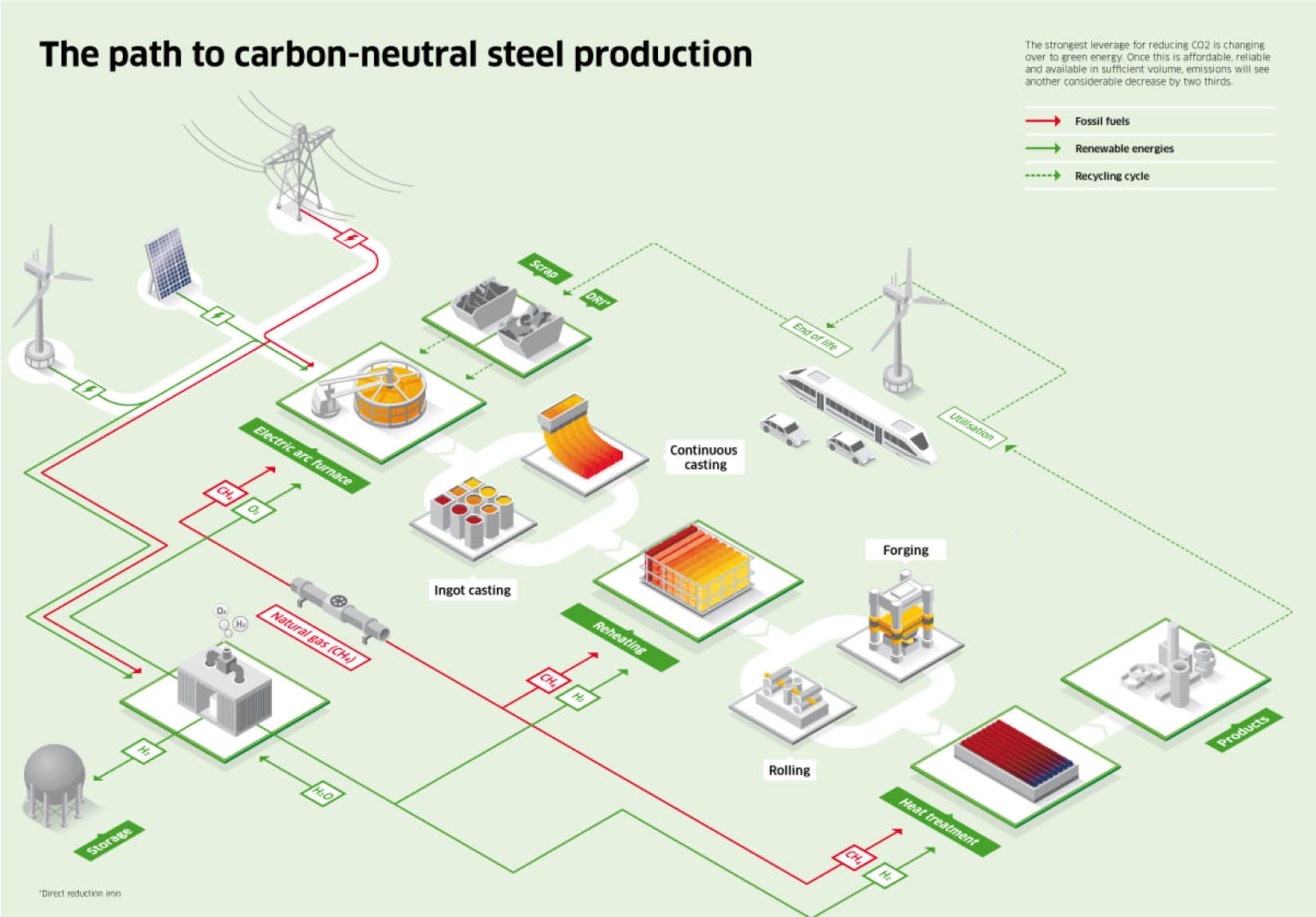
We are working to further reduce the CO₂ emissions from our steel production, with the goal of reducing Scope 1 and 2 emissions to zero by 2039.
Would you like to join us as a decarbonization pioneer?
With us, you can lead your company into a green future.
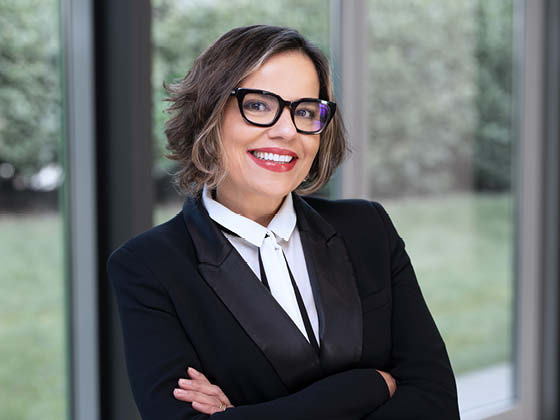
Luciana Filizzola
Director Sustainability and Communications