High Nitrogen Steels
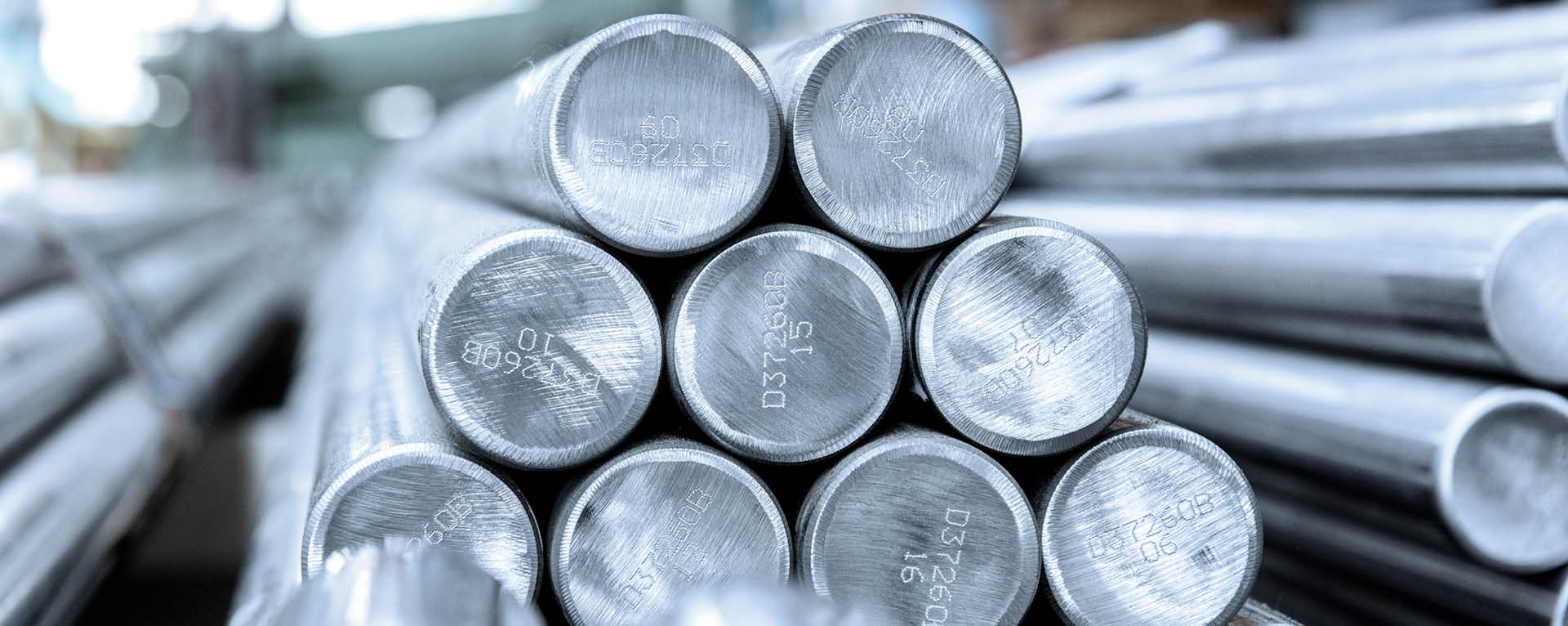
High-nitrogen steels, also known as HNS, are advanced stainless steels for applications where conventional martensitic or austenitic stainless steels reach their performance limits.
Through targeted nitrogen alloying and high-purity remelting process, they combine high strength, hardness, corrosion resistance, wear resistance and dimensional stability in one material group.
The GMH Gruppe offers a specialized portfolio of high-nitrogen steels, including Cronidur® 30, the GMH Gruppe brand name for 1.4108 / X30CrMoN15-1, as well as the high-strength austenitic grades P900N and P2000. These materials are used in demanding applications such as precision rolling bearings, actuators, ball screws, drive components, aerospace systems, medical technology and energy applications.
High-nitrogen steels are the right choice when standard stainless steels are no longer sufficient — especially where components must withstand high mechanical loads, corrosive environments, dynamic stress, or where non-magnetic properties are required.
HNS Portfolio — Grades & Application Areas
| Grade | Material No. | Microstructure | Key Benefits | Typical Industries & Components |
|---|---|---|---|---|
| Cronidur® 30 (GMH Brand for 1.4108) | 1.4108 / X30CrMoN15-1 | Martensitic | High hardness, very good wear & corrosion resistance | Precision & rolling bearings, ball screws, pumps, valves, knives |
| HNS 40 HC | 1.4123 / X40CrMoVN16-2 | Martensitic | High hardness, wear & corrosion resistant | Highly stressed tools, specialty knives, bearings |
| HNS 28 MP | 1.4123 / X40CrMoVN16-2 | Martensitic | Good corrosion & wear resistance, excellent polishability | Mould steels, bearings, cutlery/blades, engine components, pump & valve components, plastic mould |
| P 2000 | P 2000 1.4452 / X13CrMnMoN18-14-3 | Austenitic | Non-magnetic, maximum strength, PREN ≈ 45, biocompatible, corrosion resistant | Offshore actuators, medical implants, high-pressure valves, linear technology, jewelry/watches |
| P 900 N | 1.3815 / X8CrMnN19-19 | Austenitic | High yield strength (≥ 900 MPa), non-magnetic | Generator retaining rings, power generation, marine technology |
| P900N+Mo (1.4456) | 1.4456 / X8CrMnMoN18-18-2 | Austenitic | High yield strength, corrosion resistance, high elongation, low magnetic permeability | Energy & power engineering, pump impellers, spindles, fastening technology, offshore/marine, medical instruments |
| P 4472 | 1.4472 / X4CrNiMnMo21-9-4 | Austenitic | Biocompatible, corrosion resistant | Medical technology / implants |
High-Nitrogen Steels – Properties, Benefits, and Applications
CRONIDUR® 30
Material No.: 1.4108 | X30CrMoN15-1
Cronidur® 30 is the brand name of GMH Gruppe for the high-nitrogen martensitic stainless steel 1.4108 (X30CrMoN15-1). Unlike conventionally produced 1.4108 variants, Cronidur® 30 is manufactured exclusively using the PESR process (Pressure Electro-Slag Remelting), enabling nitrogen alloying beyond the normal solubility limit and achieving an exceptionally high level of material cleanliness.
The combination of PESR technology and targeted nitrogen alloying results in a homogeneous microstructure with finely dispersed carbonitrides, outstanding dimensional stability, and excellent resistance to wear and corrosion.
With a hardness of >58 HRC, Cronidur® 30 combines high strength, high fracture toughness, and a tempering resistance of up to 475 °C – a unique property profile for highly stressed precision components.
Compared to conventional steels such as AISI 440C or 100Cr6, Cronidur® 30 offers significantly improved corrosion resistance, higher dimensional stability, and superior performance under dynamic and cyclic loading conditions.
Chemical Composition (in wt.%)
| Element | Min. | Max. |
|---|---|---|
| C | 0,25 | 0,35 |
| Si | 1,00 | |
| Mn | 1,00 | |
| Cr | 14,0 | 16,0 |
| Mo | 0,85 | 1,10 |
| Ni | 0,5 | |
| N | 0,3 | 0,5 |
Properties (Rating scale: 1 = low, 10 = excellent)
| Property | Rating (1–10) |
|---|---|
| Weldability | 1/10 |
| Machinability | 9/10 |
| Wear resistance | 8/10 |
| Polishability | 10/10 |
| Corrosion resistance | 9/10 |
Product Portfolio
| Form | Min. | Max. | Min. Production Quantity |
|---|---|---|---|
| Bars (Ø) | 5 mm | 350 mm | 0,600 - 1.200 kg |
| Sheets | 3 mm | 20 mm | 700 kg |
| Blanks (Thickness) | 20 mm | 340 mm | 250 – 1.000 kg |
| Wire Rod (Ø) | 5 mm | 21 mm | 600 kg |
Contact CRONIDUR® 30
We manufacture all our products to customer specifications. So what are your specifications?
Please feel free to contact us. Together we will find your perfectly customized solution.

Jörg Schulze
Sales Director Retaining Rings & HNS
HNS 40
Material No.: 1.4123 | X40CrMoVN16-2
HNS 40 (1.4123 – X40CrMoVN16-2) is a martensitic high-nitrogen stainless steel developed for applications requiring a combination of high hardness, wear resistance, corrosion resistance, and superior surface quality.
The alloying elements carbon, chromium, molybdenum, vanadium, and nitrogen create a material with excellent resistance to wear and corrosion while maintaining exceptional polishability.
Optimum corrosion resistance is achieved in the hardened and polished condition or after low-temperature tempering, making HNS 40 particularly suitable for precision surfaces exposed to aggressive environments.
HNS 40 is designed for highly stressed components such as:
- Cutting and tool components
- Surgical and medical instruments
- Plastic injection moulds
- Glass industry moulds and tooling
- Precision wear components
The material combines high surface hardness with excellent polishability, enabling the production of components with high-gloss surfaces, tight dimensional tolerances, and long service life under continuous mechanical loading.
Chemical Composition (in wt.%)
| Element | Min. | Max. |
|---|---|---|
| C | 0,37 | 0,45 |
| Cr | 15,0 | 16,50 |
| Mo | 1,50 | 1,90 |
| V | 0,20 | 0,40 |
| N | 0,16 | 0,25 |
Properties (Rating scale: 1 = low, 10 = excellent)
| Property | Rating |
|---|---|
| Weldability | 0/10 |
| Machinability | 9/10 |
| Wear resistance | 8/10 |
| Polishability | 10/10 |
| Corrosion resistance | 9/10 |
Product Portfolio
| Form | Min. | Max. |
|---|---|---|
| Bars | 30 mm | 100 mm |
| Blanks (Thickness) | 30 mm | 450 mm |
Contact HNS 40
We manufacture all our products to customer specifications. So what are your specifications?
Please feel free to contact us. Together we will find your perfectly customized solution.
Jörg Schulze
Sales Director Retaining Rings & HNS
P2000
Material No.: 1.4452 | X13CrMnMoN18-14-3
P2000 (1.4452 – X13CrMnMoN18-14-3) is a non-magnetic high-nitrogen austenitic stainless steel developed for applications requiring an exceptional combination of strength, corrosion resistance, toughness, and biocompatibility.
The material is produced using the PESR process, allowing nitrogen alloying beyond the normal solubility limit under atmospheric conditions. The result is an ultra-clean metallic matrix with a highly homogeneous microstructure, significantly improving mechanical performance and corrosion resistance.
Through work hardening, P2000 can achieve tensile strengths of up to 2000 MPa while maintaining high ductility and fracture toughness. Its unique ratio of fracture toughness to elastic modulus makes P2000 one of the most advanced corrosion-resistant high-strength steels available for demanding engineering applications.
Chemical Composition (in wt.%)
| Element | Min. | Max. |
|---|---|---|
| C | 0,15 | |
| Si | 1.00 | |
| Mn | 12.00 | 16.00 |
| Cr | 16.00 | 20.00 |
| Mo | 2.50 | 4.20 |
| Ni | 0.30 | |
| N | 0.75 | 1.00 |
Properties (Rating scale: 1 = low, 10 = excellent)
| Property | Rating (1–10) |
|---|---|
| Weldability | 2/10 |
| Machinability | 7/10 |
| Wear resistance | 8/10 |
| Corrosion resistance | 9/10 |
| Toughness | 9/10 |
| Strength | 9/10 |
| Polishability | 10/10 |
Product Portfolio
| Form | Min. | Max. | Min. Production Quantity |
|---|---|---|---|
| Bars Ø | 5 mm | 20 mm | 600 kg |
| Bars Ø | 40 mm | 85 mm | 1000 - 1400 kg |
| Wire Rod Ø | 5 mm | 20 mm | 600 kg |
Contact P2000
We manufacture all our products to customer specifications. So what are your specifications?
Please feel free to contact us. Together we will find your perfectly customized solution.
Jörg Schulze
Sales Director Retaining Rings & HNS
P900N | P900N+Mo
Material No.: P900N – 1.3815 | X8CrMnN19-19
P900N+Mo – 1.4456 | X8CrMnMoN18-18-2
P900N (1.3815 – X8CrMnN19-19) and P900N+Mo (1.4456 – X8CrMnMoN18-18-2) are non-magnetic austenitic stainless steels developed for applications requiring high strength, excellent toughness, and outstanding corrosion resistance under demanding operating conditions.
Both materials are produced using the PESR process, enabling nitrogen alloying beyond the normal solubility limit.
Combined with advanced forging and cold-forming techniques, the PESR process creates a fine, homogeneous, ultra-clean microstructure with excellent mechanical and corrosion-resistance properties.
P900N+Mo additionally contains molybdenum, providing even greater corrosion resistance in aggressive and chloride-containing environments.
Key advantages of P900N and P900N+Mo include:
- High yield strength (≥ 900 MPa)
- Non-magnetic properties
- Excellent toughness and fatigue resistance
- Very good resistance to pitting and crevice corrosion
- High structural stability under dynamic loading
Chemical Composition (in wt.%) | 1.3815 – X8CrMnN19-19
| Element | Min. | Max. |
|---|---|---|
| C | 0.10 | |
| Si | ||
| Mn | 17.0 | 20.0 |
| Cr | 17.0 | 20.0 |
| Mo | ||
| N | 0.70 | 1.00 |
Chemische Zusammensetzung | 1.4456 – X8CrMnMoN18-18-2
| Element | Min. | Max. |
|---|---|---|
| C | 0.10 | |
| Si | 1.00 | |
| Mn | 17.0 | 20.0 |
| Cr | 16.0 | 19.0 |
| Mo | 1.80 | 2.50 |
| N | 0.80 | 1.00 |
Properties (Rating scale: 1 = low, 10 = excellent)
| Property | Rating (1–10) |
|---|---|
| Weldability | 2/10 |
| Machinability | 7/10 |
| Wear resistance | 8/10 |
| Corrosion resistance | 9/10 |
| Toughness | 9/10 |
| Polishability | 10/10 |
Product Portfolio
| Form | Min. | Max. |
|---|---|---|
| Bars | 10 mm | 80 mm |
| Sheets | On request | On request |
| Blanks (Thickness) | 30 mm | 100 mm |
| Wire Rod | 5,5 mm | 20 mm |
Contact P900N | P900N+Mo
We manufacture all our products to customer specifications. So what are your specifications?
Please feel free to contact us. Together we will find your perfectly customized solution.
Jörg Schulze
Sales Director Retaining Rings & HNS
HNS 28 MP
Material No.: 1.4028 mod. | X30CrN13
HNS 28 MP (1.4028 mod. – X30CrN13) is a martensitic high-nitrogen chromium steel developed for applications requiring high wear resistance, corrosion resistance, and excellent surface quality.
The combination of chromium, carbon, and nitrogen above the conventional solubility limit results in improved corrosion resistance and high hardness while maintaining outstanding polishability.
Optimum corrosion resistance is achieved in the hardened and tempered condition at low tempering temperatures with polished surface finish.
The material combines:
- High surface hardness and wear resistance
- Excellent polishability for high-gloss surfaces
- Good corrosion resistance under continuous loading
- Reliable dimensional stability for precision components
Compared to conventional martensitic stainless steels, HNS 28 MP offers improved corrosion resistance and enhanced surface performance, making it especially suitable for precision applications where both durability and surface quality are critical.
Chemical Composition (in wt.%)
| Element | Min. | Max. |
|---|---|---|
| C | 0,20 | 0,30 |
| Si | 1,00 | |
| Mn | 0,30 | 0,60 |
| Cr | 13,0 | 15,0 |
| Mo | 0,15 | |
| N | 0,30 | 0,60 |
Properties (Rating scale: 1 = low, 10 = excellent)
| Property | Rating (1–10) |
|---|---|
| Weldability | 1/10 |
| Machinability | 9/10 |
| Wear resistance | 8/10 |
| Polishability | 10/10 |
| Corrosion resistance | 9/10 |
Product Portfolio
| Form | Min. | Max. |
|---|---|---|
| Bars | 20 mm | 100 mm |
| Blanks (Thickness) | 30 mm | 450 mm |
Contact HNS 28 MP
We manufacture all our products to customer specifications. So what are your specifications?
Please feel free to contact us. Together we will find your perfectly customized solution.
Jörg Schulze
Sales Director Retaining Rings & HNS
High-Nitrogen Steels – Key Properties and Applications
Key Properties and Benefits
High-nitrogen steels achieve their performance profile through controlled alloying of up to 1% nitrogen and high-purity remelting processes such as PESR.
- Exceptional strength and toughness
Tensile strengths from >900 MPa up to 2000 MPa (cold worked) while maintaining high impact energy (≥ 350 J) - Outstanding corrosion resistance
Excellent resistance to pitting and crevice corrosion due to high PREN values of approximately 40–48 - High wear resistance and dimensional stability
Particularly suitable for precision bearings, actuators, tools, and dynamically loaded components - Non-magnetic and biocompatible properties
Ideal for medical technology, MRI-compatible systems, precision measurement equipment, and sensitive electronic applications - Reduced dependence on nickel
Comparable or superior performance compared to high-nickel alloys with lower nickel content and improved cost efficiency - No additional surface coatings required
Inherent corrosion and wear resistance reduce the need for complex coating processes and support REACH-compliant production - Sustainable “Green Steel” production
Manufactured using up to 100% recycled scrap and electricity from renewable energy sources
HNS vs. Conventional Materials
Martensitic High-Nitrogen Steels
Grades such as Cronidur® 30, HNS 40, and HNS 28 MP offer significantly improved corrosion resistance and polishability compared to conventional bearing and martensitic stainless steels such as AISI 440C and 100Cr6—while maintaining comparable or even higher hardness levels.
Austenitic High-Nitrogen Steels
Grades such as P2000 and P900N exceed conventional austenitic stainless steels like 316L in terms of:
- Strength
- ToughnessPitting and crevice corrosion resistance
At the same time, they offer:
- Lower magnetic permeability
- Reduced nickel content
- Excellent biocompatibility depending on grade
Compared to standard stainless steels, austenitic HNS grades enable:
- Higher mechanical performance in corrosive environments
- Lightweight component design due to higher strength
- Reliable performance in non-magnetic and safety-critical applications
Contact High-Nitrogen Steels
We manufacture all our products to customer specifications. So what are your specifications?
Please feel free to contact us. Together we will find your perfectly customized solution.
Jörg Schulze
Sales Director Retaining Rings & HNS
Industries & Applications
Aerospace
Typical Applications:
- Spindles and actuators
- Landing gear components
- Satellite structures
- Engine components
- Ball screw drives and precision bearings
Cronidur® 30 bars are particularly suitable for high-performance rolling contact applications in aerospace systems.
Recommended Materials
- Cronidur® 30
- P2000
Technical Advantages:
- High corrosion and corrosion-fatigue resistance
- Excellent contact and rolling fatigue resistance
- Ultra-clean microstructure through PESR for safety-critical applications
- High reliability under cyclic and dynamic loading conditions
Mechanical & Plant Engineering
Typical Applications:
- Ball and roller bearings
- Ball screw drives and linear systems
- Valve discs in corrosive environments
- Extruder screws and forming tools
- Spindles, pumps, and valves
Recommended Materials:
- Cronidur® 30
- HNS 28 MP
- P900N
Technical Advantages:
- High wear and contact resistance
- Improved service life under dynamic loads
- Good dimensional stability under thermal loading
- High-precision manufacturing due to excellent dimensional accuracy
Energy & Offshore
Typical Applications:
- High-pressure pumps
- Turbine components
- Generator retaining rings
- Power plant technology
- Engine and energy machinery
- Offshore and marine systems
Recommended Materials:
- P2000
- P900N+Mo
Technical Advantages:
- Good resistance to pitting and crevice corrosion
- High strength combined with good toughness
- Non-magnetic variants available depending on grade
- High impact energy even at low-temperature applications down to –100 °C
Medical Technology
Typical Applications:
- Surgical instruments such as scalpels, drills, and cutting tools
- Medical screws and fixation systems
- Dental instruments and dental tools
- Implants and precision medical components
- Precision bearings for medical devices
Materials are supplied as HNS bars and wire rods for further precision processing.
Recommended Materials:
- Cronidur® 30
- HNS 40
- P900N
Technical Advantages:
- Excellent corrosion resistance in sterilization environments
- Good resistance to repeated cleaning and sterilization cycles
- Biocompatible properties depending on grade
- Outstanding polishability for hygienic and high-gloss surfaces
- High dimensional stability for precision medical components
Chemical & Pharmaceutical Industry
Typical Applications:
- Conveying and dosing systems
- Extrusion and portioning equipment
- Pump impellers and spindles
- Fastening and joining elements such as bolts and screws
Recommended Materials:
- P2000
- P900N
- P900N+Mo
Technical Advantages:
- Exceptional resistance to pitting and crevice corrosion in aggressive media
- Low magnetic permeability for sensitive applications
- Biocompatible properties suitable for product-contact environments depending on grade
- High strength combined with excellent ductility
- Reliable performance in corrosive process environments
Tool & mould Making
Typical Applications:
- Plastic injection moulds
- High-gloss polishable moulds
- Tools for plastics processing
- Moulds for the glass industry
- Cutting blades and wear-intensive components
Recommended Materials:
- Cronidur® 30
- HNS 40
- HNS 28 MP
Technical Advantages:
- Highest polishability (10/10) for high-gloss surfaces
- High wear resistance under continuous loading
- Good machinability for complex tool geometries
- Good hardenability for defined surface hardness
- Long service life in wear-intensive production environments
Food & Beverage
Typical Applications:
- Cutting knives and industrial blades
- Bearings and linear systems for filling and processing units
- Filling and mixing systems
- Screws, pistons, and precision wear components
- Cutlery and blade applications
- Materials are supplied as HNS sheets and bars for further precision manufacturing.
Recommended Materials:
- Cronidur® 30
- HNS 28 MP
- HNS 40
Technical Advantages:
- High corrosion and wear resistance
- Good cleaning and hygienic properties
- Food-grade steels in accordance with hygienic requirements of the food industry
- Highest polishability for food-compliant surfaces
- Long service life under continuous operating conditions
Automotive & Engine Technology
Typical Applications:
- Bearings for racing and high-performance applications
- Fuel injectors for combustion engines
- Special bearings and precision components
- Engine, pump, and valve components
- Fastening and connecting elements
Recommended Materials:
- HNS 28 MP
- P900N
Technical Advantages:
- High wear resistance under dynamic loading
- Good machinability for series production
- Good corrosion resistance in the hardened and tempered condition
- Suitable for precision components with tight dimensional tolerances
- Reliable performance under cyclic mechanical stress
Jewellery & Watches
Typical Applications:
- High-quality jewellery components
- Watch components and precision parts
- Wear-resistant decorative elements
Recommended Materials:
- P2000
- P900N
Technical Advantages:
- Excellent polishability with high scratch resistance
- Low magnetic permeability
- Biocompatible and skin-friendly properties depending on grade
- High strength allowing slender and lightweight component designs
- Excellent surface quality for premium applications
Contact Industries & Applications
We manufacture all our products to customer specifications. So what are your specifications?
Please feel free to contact us. Together we will find your perfectly customized solution.
Jörg Schulze
Sales Director Retaining Rings & HNS
PESR High Nitrogen Steels – Manufacturing Expertise and FAQs
GMH Gruppe operates one of the world’s largest PESR (Pressure Electro-Slag Remelting) facilities in Essen for the production of premium high-nitrogen steels.
PESR technology enables nitrogen alloying beyond the normal solubility limit under atmospheric conditions while achieving an exceptionally high level of material purity. This process is essential for manufacturing high-performance steels used in safety-critical and highly stressed applications.
Advantages of PESR Technology
- Homogeneous microstructure with minimal segregation
- Ultra-clean metallic matrix with highest cleanliness levels
- Higher achievable nitrogen contents compared to conventional melting processes
- Improved fatigue resistance and dimensional stability
- Excellent mechanical and corrosion-resistant properties
1. What is the difference between 1.4108 and Cronidur® 30?
Cronidur® 30 is the proprietary GMH Gruppe brand for the high-nitrogen martensitic steel 1.4108 (X30CrMoN15-1).
Unlike conventionally melted 1.4108 grades, Cronidur® 30 is produced exclusively using the PESR process, resulting in:
- Superior microstructural homogeneity
- Higher cleanliness levels
- Improved dimensional stability
- Enhanced corrosion and fatigue resistance
This makes Cronidur® 30 particularly suitable for precision bearings, aerospace components, and highly stressed rolling-contact applications.
2. What distinguishes high-nitrogen steels (HNS) from conventional stainless steels?
High-nitrogen steels contain up to 1% nitrogen, which stabilizes the austenitic or martensitic microstructure and significantly increases strength, toughness, and corrosion resistance. Nitrogen can partially replace nickel while improving mechanical performance.
Combined with high-purity remelting technologies such as PESR, HNS steels achieve:
- Higher tensile and yield strength
- Improved resistance to pitting and crevice corrosion
- Excellent cleanliness and microstructural homogeneity
- Non-magnetic properties depending on grade
High-nitrogen steels are available as both martensitic and austenitic variants.
3. How corrosion-resistant are high-nitrogen steels?
High-nitrogen steels belong to the high-performance group of corrosion-resistant stainless steels.
Austenitic grades such as P2000 achieve PREN values of approximately 45–48, providing excellent resistance to pitting and crevice corrosion in aggressive environments.
Martensitic grades such as Cronidur® 30 achieve PREN values of approximately 20–24 while offering significantly higher hardness and wear resistance.
This combination makes HNS steels suitable for:
- Seawater and offshore environments
- Medical and sterilization applications
- Corrosive process industries
- Precision bearings and high-performance components
4. Can high-nitrogen steels be machined and welded?
Yes, although machinability and weldability depend on the material group.
Martensitic HNS steels
(Cronidur® 30, HNS 40, HNS 28 MP)
- Preferably hard-machined in the hardened condition
- Suitable for grinding and hard turning
- Limited weldability due to the martensitic microstructure
Austenitic HNS steels
(P2000, P900N)
- Good machinability comparable to 316L
- Improved tool life using adapted coatings such as TiAlN
- Weldable using suitable filler materials
- Generally no pre- or post-heat treatment required
5. When are high-nitrogen steels the right choice?
High-nitrogen steels are particularly suitable when applications require:
- Very high strength combined with corrosion resistance
- Increased wear resistance and surface hardness
- Non-magnetic material properties
- High toughness under dynamic loading
- High work-hardening potential for maximum final strength
- Long service life in aggressive or safety-critical environments
What you can expect
Circular Economy
We use nearly 100% scrap steel in our steel production, thereby enabling closed-loop material cycles.
Low-CO₂ Production
Use of 100% electric arc furnace (EAF) steel.
High-Performance Steel
Maximum strength and hardness combined with excellent toughness, high corrosion resistance, excellent high-temperature strength, outstanding grindability and polishability, excellent wear resistance, and a high degree of purity.
Precisely calculate the weight of your steel
With our steel weight calculator, you can work out the weight of your desired product in just a few mouse clicks.